The 4 Hidden Causes of Ant Infestations
What I Find in 80% of Homes With Ant Problems After 10 Years In Pest Control

I’m Anthony La Tour. Since 2016, I’ve been crawling through crawlspaces, climbing into attics, and inspecting homes for every pest you can imagine—termites, rats, spiders, and yes, ants.Over the years, I’ve serviced thousands of homes with national pest control companies doing general pest and full remediation work.Here’s what I’ve learned:In roughly 80% of the ant problems I see, the real cause isn’t inside the home at all.Not your kitchen counters.Not your pantry.Not even the rooms where you see ants most often.The ants inside your home are almost always coming from conditions outside—conditions most homeowners walk past every day without noticing.That’s why sprays, baits, and home remedies feel like they “almost” work… but never last.You’re treating the symptom, not the cause.This short guide will show you:
What’s actually attracting ants to your home
Why common solutions fail
What you need to fix first to stop them for good
Let’s start by clearing up what doesn’t work...
4 Home Remedies That DON'T Work
💀 Raid Ant Spray
Raid only kills the worker ants you can see—the expendable scouts.It never reaches the queen or the colony hidden in walls, soil, or voids. Worse, spraying can trigger budding, where threatened colonies split and form new satellite colonies nearby.I see this constantly: homeowners spray ants in the kitchen, then suddenly ants appear in three or four rooms instead.Result: You turn one problem into several.
🍯 Terro Bait Stations
Terro can work sometimes—but only under very specific conditions.It requires ants to find it, accept it, and feed on it consistently. It also only works on sugar-feeding ants, ignoring protein- and grease-feeders entirely.If ants are coming from multiple colonies (very common), or if entry points aren’t sealed, new ants simply replace the old ones.Result: Temporary relief, followed by a return.
🥧 Cinnamon
The cinnamon in your kitchen isn’t concentrated enough to do anything meaningful.Studies showing success used concentrated cinnamon oil extracts—not grocery-store powder. Cinnamon doesn’t kill ants; it just makes them walk around it.Essential oil versions require constant reapplication and can be toxic to pets.Result: Ants reroute. You reapply. Nothing changes.
🧴 Vinegar
Vinegar kills ants on contact when wet—then does nothing once it dries.The scent disappears in hours, and ants simply rebuild their trails. The colony, queen, and thousands of ants behind the scenes remain untouched.Result: You’re playing whack-a-mole with scouts.
The Real Problem None of These Address
The ants you see inside your home are almost always coming from outside.They’re entering through gaps you don’t notice, attracted by conditions around your foundation and roofline that quietly invite entire colonies inside.Common attractants include:
Vegetation touching your house, creating direct ant highways
Clogged gutters holding moisture and organic matter
Yard debris piled against the foundation
Tree branches giving ants access to roofs and attics
In many cases, ants are living inside wall cavities and using electrical outlets as doorways.You can kill 100 ants today.The colony will send 200 tomorrow.Because the source hasn’t changed.
What's Really Causing Your Ant Problems
Last summer, I treated a $1.4M beach home owned by a retired couple. Spotless kitchen. No food left out.The homeowner told me she’d tried everything—vinegar, oils, then finally Raid directly on the counters (NOT SAFE).Anyway, I removed an outlet cover and ants poured out.Outside, a large ornamental bush was planted directly against the exterior kitchen wall. The ants weren’t coming from the kitchen—they were using the bush as a highway into a crack in the siding, nesting inside the wall, and exiting through outlets.I treated the interior and exterior and recommended trimming the bush back 12 inches.The ants never returned.That bush was just one of several conditions allowing ants into the home.In fact, there are four problem areas I see over and over.
4 Problem Areas That Create Ant Highways Into Your Home
🌿 Vegetation & Brush Touching Your Home
Plants create direct bridges from the ground to your walls while trapping moisture along the foundation.Why fixing it helps:Removing contact forces ants to cross open, dry ground—breaking their safest route inside.
🌳 Overhanging Tree Branches on Your Roof
Branches give ants access to roofs, attics, and upper-level entry points while keeping surfaces damp.Why fixing it helps:Trimming eliminates aerial access and dries out areas ants prefer.
🍂 Yard Debris Piled Against Your Foundation
Mulch, leaves, and clippings provide food, moisture, and nesting space directly next to your home.Why fixing it helps:Removing debris eliminates both shelter and incentive for colonies to establish nearby.
🏠 Clogged Gutters
Standing water and decomposing organic matter turn gutters into ant hotels attached to your house.Why fixing it helps:Clean gutters move water away from your home and eliminate roofline nesting conditions.
These Fixes Are Free... But They Won't Kill the Colony
Fixing exterior conditions is essential—but it’s only half the solution.Once ants are established inside walls, they won’t leave on their own.To stop ants for good, you need both:1. Fix the exterior conditions (vegetation, gutters, debris, branches)2. Eliminate the existing colony with the right treatmentSkip either step, and the problem comes back.Most pest control companies charge $300–$500+ per year for quarterly treatments, plus setup fees.That's where Dr. Killigan's comes in...
Why I Recommend Dr. Killigan's Six Feet Under: Barricade
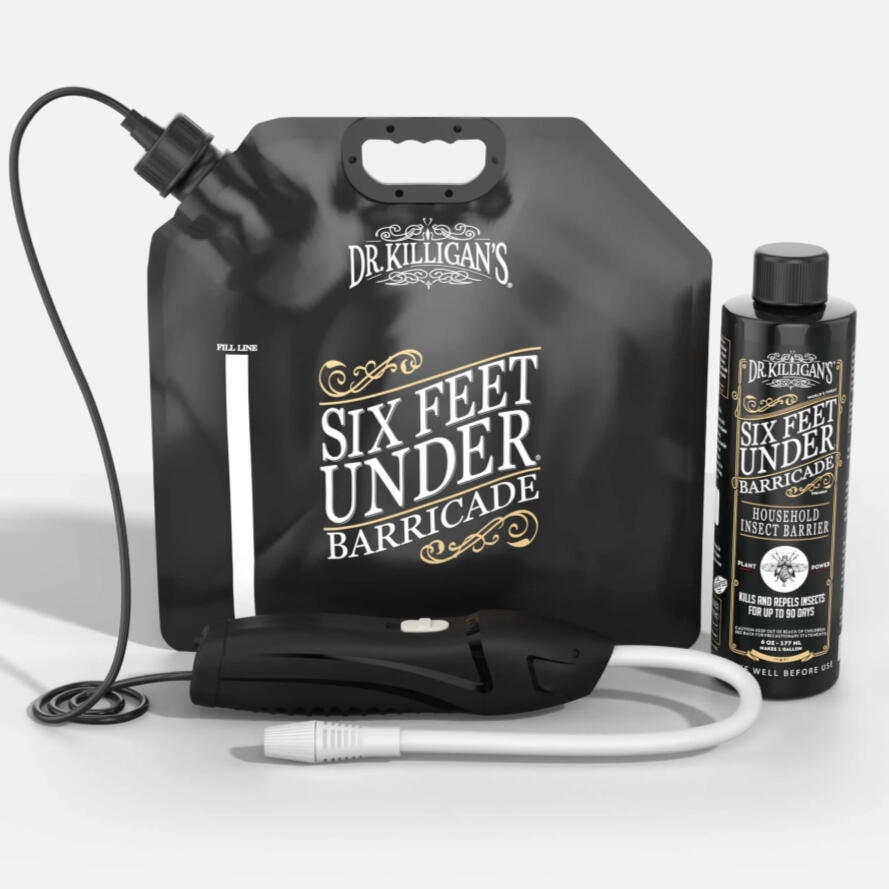
Dr. Killigan's Six Feet Under: Barricade delivers the same barrier protection I rely on to service my customers—but powered by plant-based, eco-insecticides instead of synthetic chemicals. It's designed for homeowners who want professional results without harsh toxins or recurring service fees.What that means for you:
Eliminates entire ant colonies, not just visible scouts
Uses a mechanical-kill method that penetrates exoskeletons—ants can't build resistance
Creates a 90-day protective barrier around your home's perimeter
Takes about 10 minutes to apply—just dilute, spray, and you're done
Classified as "minimum risk" under U.S. law—the safest category in pest control
Works on 50+ household pests, not just ants
Costs less than one professional visit for an entire season
Backed by a Bug-Free Guarantee—if bugs return, they'll replace or refund your treatment
It’s not about spraying more—it’s about using the right product, in the right place, on the right schedule.
Ready To Get Rid of Your Ants For Good?
Remember:Fix the exterior conditions firstThen eliminate the colonyMost homeowners never learn step one.Now you have.
—Anthony La Tour
Pest Control Specialist
Pacific Northwest
Disclosure: This guide contains affiliate links. If you purchase through them, I may earn a commission at no extra cost to you. I only recommend products I trust and have seen work firsthand.